The road south-west from Gaborone towards Kanye runs through the country where David Livingstone spent his years as a working missionary, before he became an explorer. Two national monuments here make the best historical half-day from the capital.
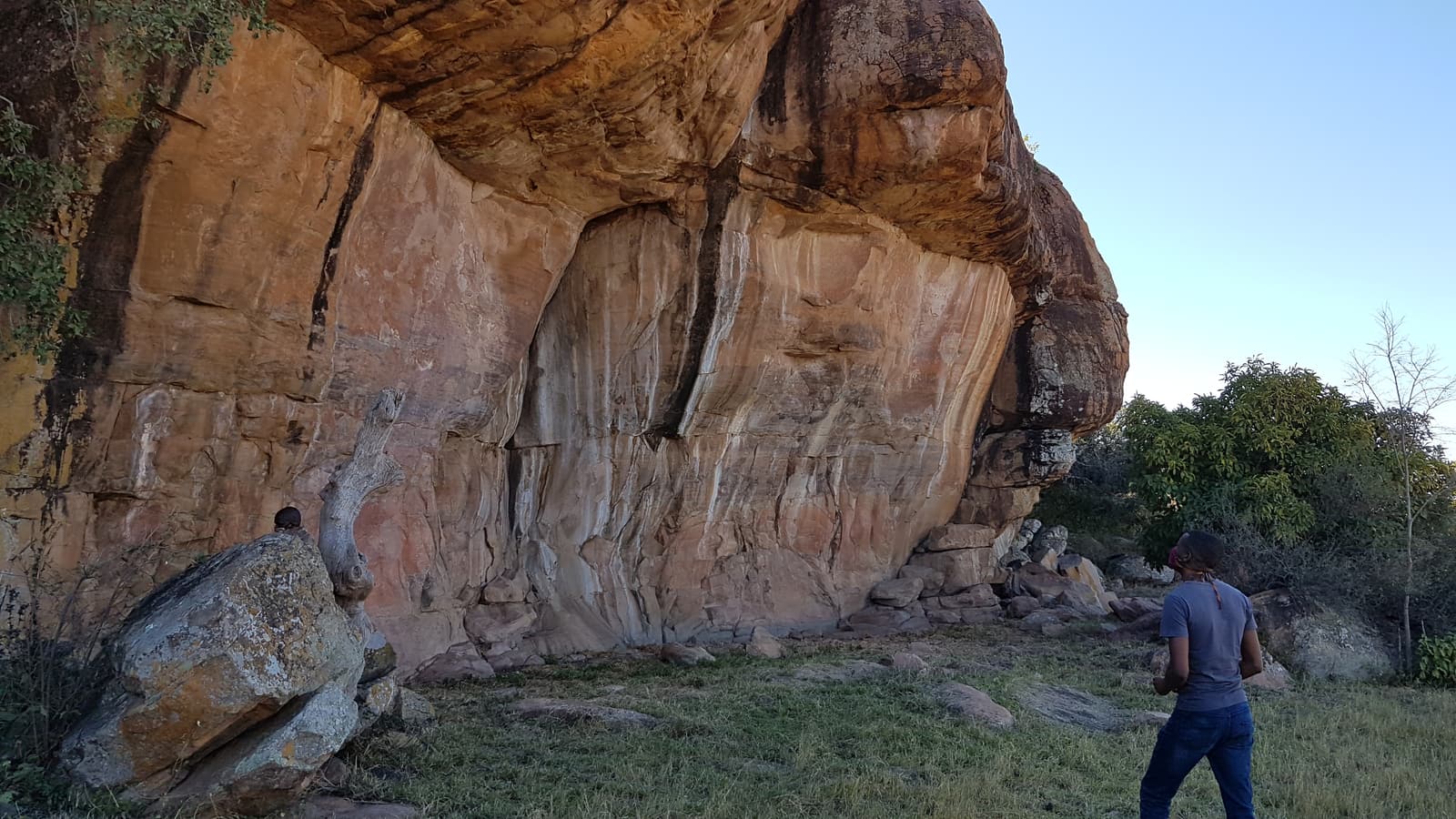
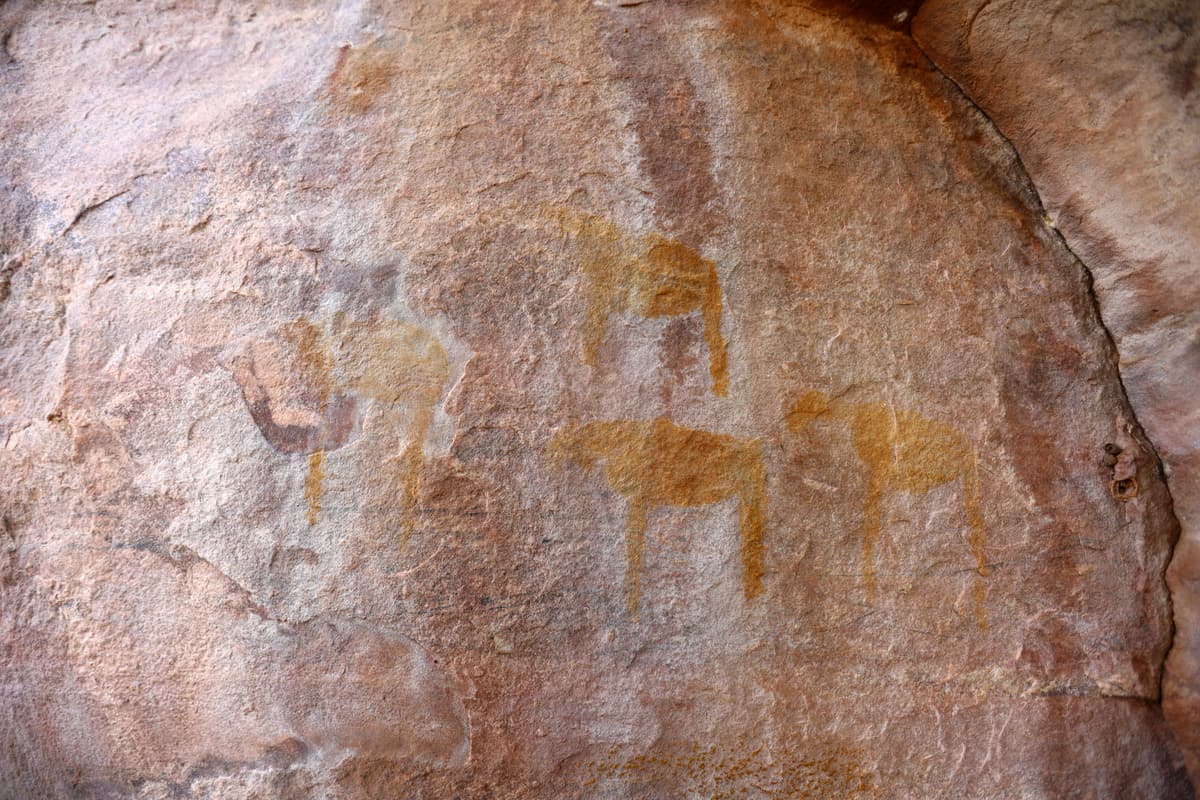
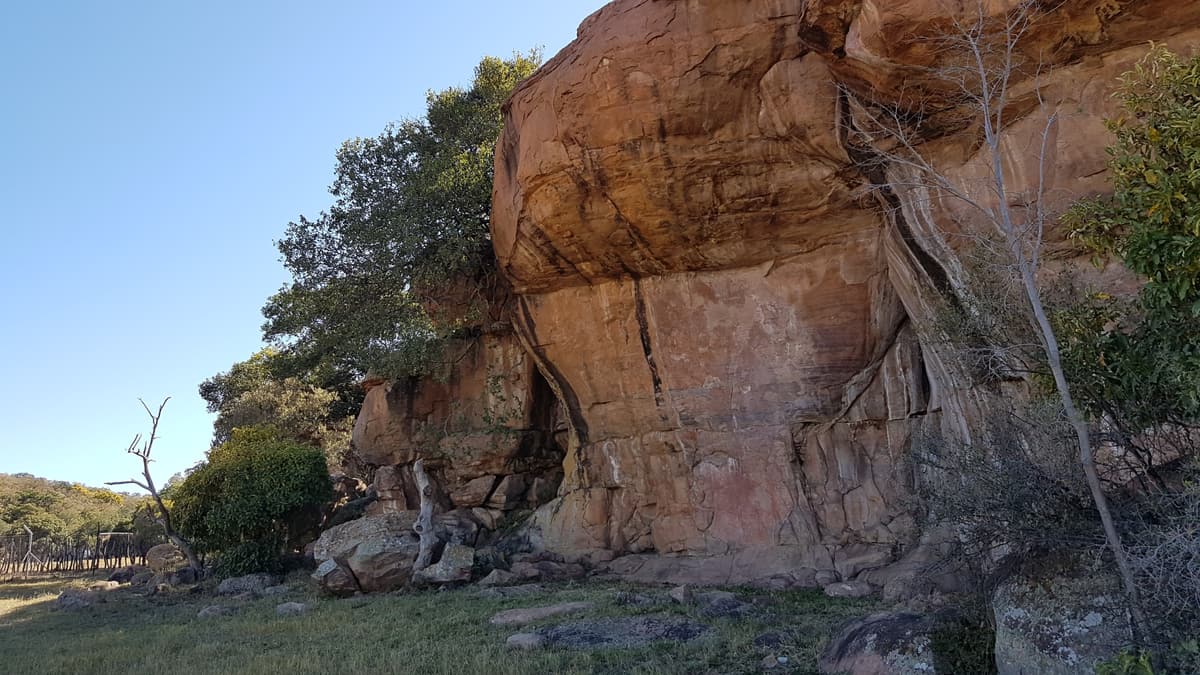
At the village of Manyana, about 50 km from the city, a sandstone cliff on the edge of the Kolobeng hills carries panels of rock paintings in red and orange ochre: giraffe, antelope, geometric designs and human figures. They are generally attributed to San (Khoesan) painters and thought to be at least several hundred, and perhaps up to two thousand, years old. In a region where painted sites are rare, they are precious. Closer to the city, near Kumakwane, are the remains of Kolobeng, Livingstone’s third and last mission station.
Top things to do: Manyana Rock Paintings & Kolobeng
See the paintings with the site guide
The site is fenced and a custodian leads you along the foot of the cliff to five or so painted areas. Some figures are faint, so let your eyes adjust. Nearby is a cave associated with Mma Sechele, wife of the Bakwena chief Sechele I, who is said to have sheltered there during the Boer attack of 1852.
Stand under Livingstone’s tree
In the village is an enormous wild fig, its branches propped and rooted over a wide area, under which Livingstone is said to have preached, taught and treated patients in the 1840s. It is a protected monument and a peaceful place to stop.
Walk the ruins of Kolobeng
Livingstone, his wife Mary and their children lived at Kolobeng from 1847 to 1852. Here he baptised Kgosi Sechele — his only known convert — and built what are often described as the first church and school in what is now Botswana. You can see the foundations of the house, the outline of the church and a small cemetery that includes the grave of the couple’s infant daughter, Elizabeth.
Take the guided half-day
The Manyana village tour covers the paintings and the tree with a driver-guide in about three and a half hours; longer two-day options add the city.
How to get to Manyana Rock Paintings & Kolobeng
- By car: take the A10 west from Gaborone through Mogoditshane towards Thamaga and Kanye. Kolobeng is signposted near Kumakwane after about 25 km; for Manyana, continue and follow the signs south — about 50 km and one hour in total.
- Without a car: buses run to nearby villages, but the sites are spread out; a taxi for the half-day or a guided tour is far easier.
- Entry: both are national monuments with custodians on site during the day and a modest entry fee for foreign visitors. Carry cash.
Insider tips
- Never touch the paintings or splash water on them — oils and moisture destroy the pigment.
- Morning light is best on the cliff; by afternoon parts are in glare.
- Combine with Bahurutshe Cultural Village in Mmankgodi, on the same road, for a full day.
- There are no cafés at the sites. Bring water and snacks, or plan lunch in Gaborone.
Best tours: Manyana Rock Paintings & Kolobeng
These top-rated experiences are the easiest way to see Manyana Rock Paintings & Kolobeng:
Half-day trip from €151 Manyana Village Visit from Gaborone + Rock Paintings
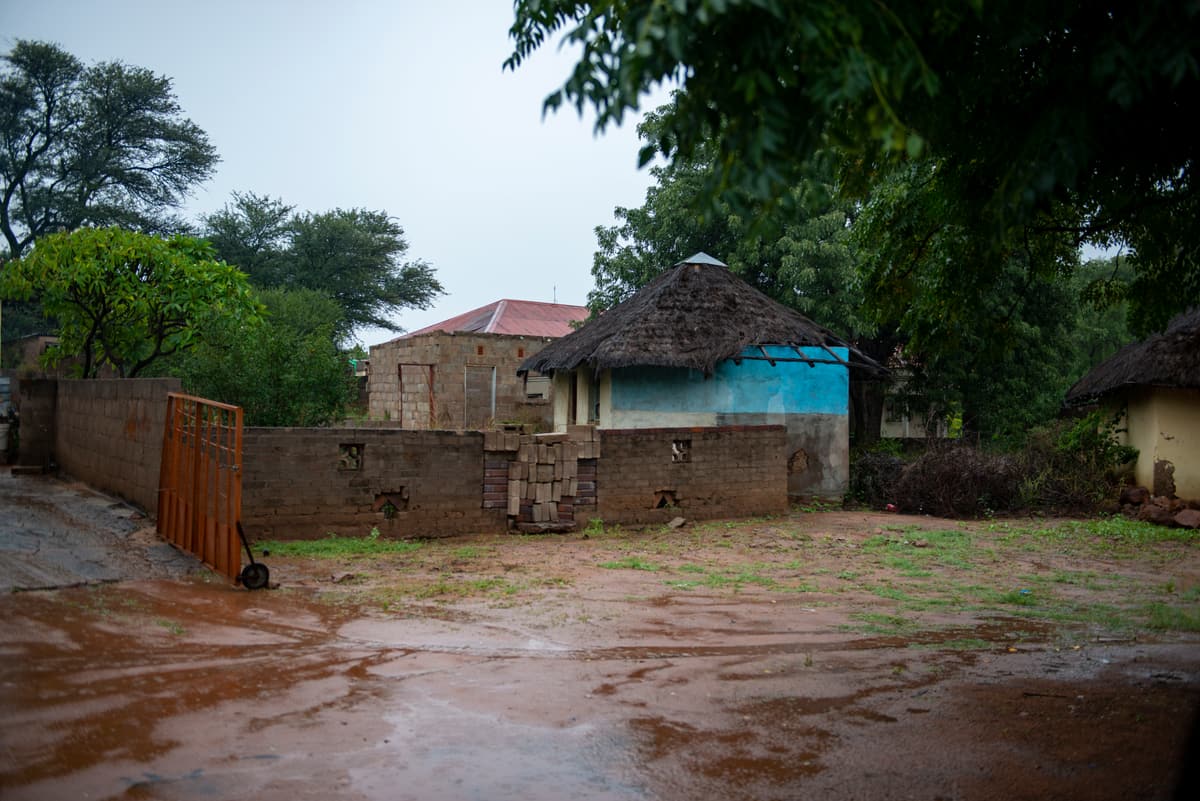
A half-day drive to the village of Manyana, home to the only well-known rock paintings in southern Botswana — giraffe, antelope and human figures on a sandstone overhang — and to the huge fig tree under which the missionary David Livingstone is said to have preached and taught in the 1840s. A neat introduction to the country beyond the capital.
- Rock paintings at Manyana, a national monument
- The fig tree where David Livingstone taught
- A look at village life south-west of the city
 Two-day tour from €195
 Multi-Day Tour from Gaborone: 2-Day City + Village Experience
A two-day programme combining the capital with village Botswana: the city tour first, then Manyana with its rock paintings and Livingstone connections, and — depending on the day — a game drive. A good choice if you prefer culture and history to a second day of wildlife.
- City tour on the first day
- Manyana village and its rock paintings
- A game drive where time allows
 Day trip from €240
 Art & Craft Tour: Villages around Gaborone
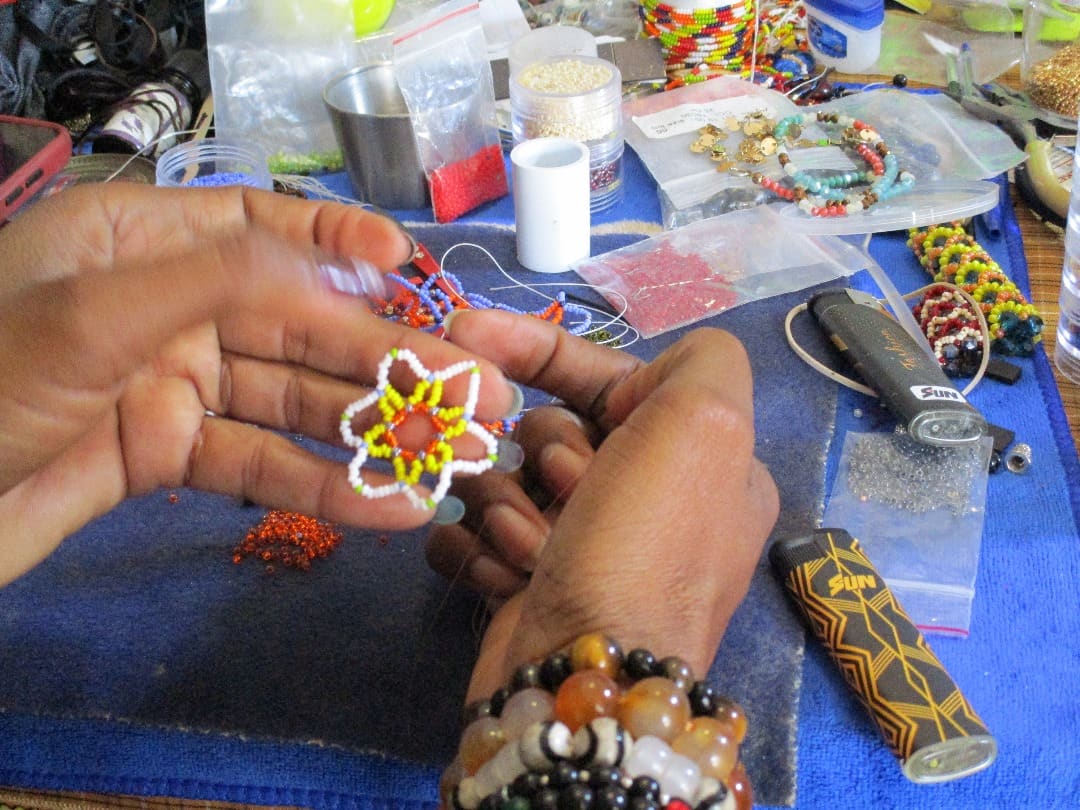
A day in the villages that ring Gaborone, where much of the country’s weaving and pottery is actually made. You visit four of them, watch the craftspeople at work, have the chance to buy direct and eat lunch at a local restaurant. It is the easy way to reach places such as Oodi without hiring a car.
- Four craft villages around the capital
- Meet weavers and potters and buy direct
- Lunch at a local restaurant