Gaborone sits in the far south-east of Botswana, barely 15 km from the South African border. That makes Johannesburg — about 360 km away by road — the gateway for nearly everyone: you either connect through O. R. Tambo airport on a one-hour flight, or you drive.
By air
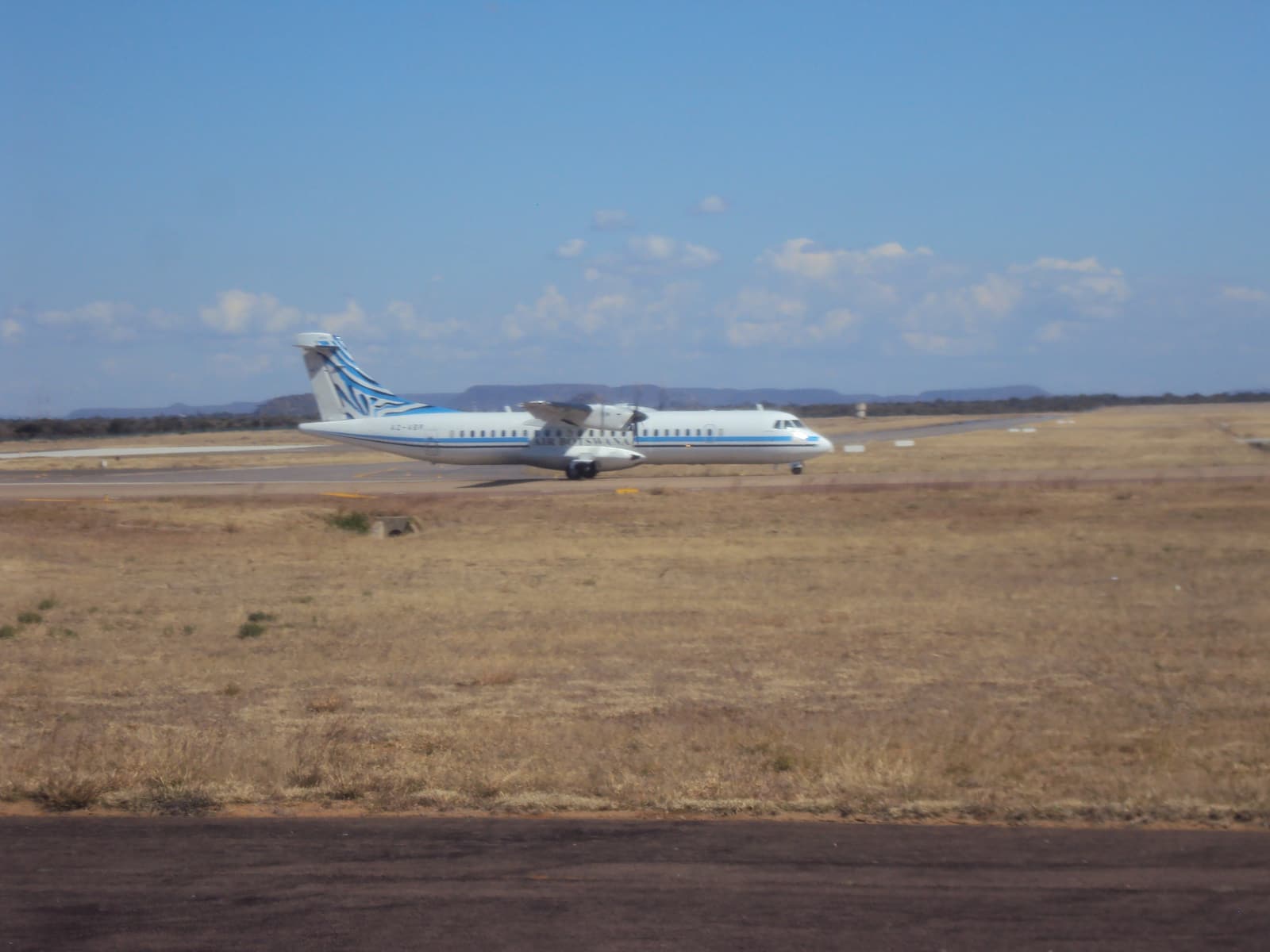
Sir Seretse Khama International Airport (GBE) is about 15 km north of the city centre. The busiest route by far is Johannesburg, flown several times a day by Air Botswana and South African regional airlines. There are also direct services from Cape Town and from Addis Ababa, which gives one-stop connections from Europe, Asia and North America; other regional routes come and go, so check current schedules.
The terminal is small and quick to get through. There is no public bus: take a hotel shuttle (most larger hotels offer one if you ask in advance), a metered or fixed-fare taxi from the rank outside, or a hire car — the main international car-rental firms have desks in arrivals. The drive to the centre takes 20–25 minutes.
How the options compare
| Route | Time | Good to know |
|---|---|---|
| Flight from Johannesburg | ≈ 1 h | Several daily; easiest connection from long-haul flights |
| Drive from Johannesburg (N4, Zeerust, Tlokweng) | 4–5 h + border | Good tarred roads; toll gates on the N4 |
| Coach from Johannesburg | 6–8 h | Daily services; allow time at the border |
| Flight from Maun or Kasane | 1–1.5 h | Air Botswana; schedules vary by season |
| Drive from Francistown (A1) | ≈ 5 h | 430 km of tarred road; avoid driving at night |
| Drive from Windhoek (Trans-Kalahari) | 11–12 h | About 1,000 km; break the journey in Kang or Ghanzi |
Driving from Johannesburg
The standard route follows the N4 west past Rustenburg to Zeerust, then turns north to the Kopfontein (South Africa) / Tlokweng (Botswana) border post, from where it is about 15 km to the city. Without delays it takes four to five hours. The border has generally been open from early morning until late evening, but hours can change — confirm before a late crossing — and queues build on Friday afternoons, Sunday evenings and around public holidays.
Two alternatives are useful when Tlokweng is busy: Ramotswa / Swartkopfontein to the south, a quiet post with shorter hours, and Pioneer Gate / Skilpadshek near Lobatse, on the Trans-Kalahari corridor, about 70 km from Gaborone.
By bus
Long-distance coaches link Johannesburg and Gaborone daily, taking six to eight hours including the border. Within Botswana, buses leave the main bus rank beside the railway station for Francistown, Maun, Kasane (usually with a change in Francistown), Serowe, Mochudi, Lobatse and Kanye. They are cheap, frequent on the main routes and leave when full.
By train
Botswana Railways has at times run an overnight passenger train between Lobatse, Gaborone and Francistown. The service has been suspended and reinstated more than once, so treat it as a bonus if it is running rather than something to plan around.
Getting around Gaborone
- Combis: white minibuses on numbered routes, mostly starting from the bus rank. Very cheap, cash only, and they stop running in the early evening.
- Taxis: shared taxis follow set routes; a “special” is a private hire — agree the fare before you get in. Call-cab companies and ride-hailing apps also operate in the city, and are the easy option after dark.
- Car hire: worthwhile if you want to visit Mokolodi, Mochudi or Manyana independently. Traffic drives on the left; the main roads are good, and the rush hours are short but real.
- On foot: Main Mall and the CBD are each walkable, but the city is spread out and hot — you will not walk between districts.
Onward travel in Botswana
For the Okavango Delta, fly to Maun; for Chobe and Victoria Falls, fly to Kasane. By road both are full-day drives of 850–950 km, usually broken at Khama Rhino Sanctuary, Francistown or Nata. See our Okavango and Chobe guide.